

What is Montessori?
The Montessori method of education, developed by Dr. Maria Montessori, is a child-centered educational approach based on scientific observations of children from birth to adulthood. Dr. Montessori’s method has been time tested, with over 100 years of success in diverse cultures throughout the world.
It is a view of the child as one who is naturally eager for knowledge and capable of initiating learning in a supportive, thoughtfully prepared learning environment. The Montessori method is an approach that values the human spirit and the development of the whole child—physical, social, emotional, and cognitive.
For a more immersive look, including learning more about the core components of an authentic Montessori school and Montessori terminology, please visit the American Montessori Society’s page on this topic.
The Importance of the Three-Year Cycle in Montessori Education
Across Early Childhood, Lower Elementary, and Upper Elementary
Montessori education is intentionally structured around three-year learning cycles—ages 3–6, 6–9, and 9–12. These cycles align directly with the child’s natural developmental stages, allowing children to learn, grow, and mature in an environment that supports long-term academic and social-emotional development.
Because the curriculum, community structure, and leadership opportunities unfold over three years at each level, TMA prioritizes enrollment for families who intend to complete the full cycle.
Early Childhood (Ages 3–6)
Building the Foundation
A Stable Environment for Deep Learning
Children remain with the same teachers and classroom community for three full years, creating security, consistency, and a strong sense of belonging. This long-term relationship allows the teachers to deeply understand each child’s learning style and tailor lessons to their needs.
A Carefully Sequenced Curriculum
The Early Childhood classroom emphasizes hands-on, concrete learning through Practical Life, Sensorial, Cultural, Math, and Language materials. Each material builds on the last, preparing the child for abstract work in the kindergarten year. This progression is most successful when a child experiences all three years.
Leadership in the Kindergarten Year
The third year is a capstone year. Children step into leadership roles—mentoring younger peers, demonstrating independence, and solidifying academic mastery. This transformation unfolds only when a child completes the full cycle.

Lower Elementary (Ages 6–9)
Exploring Big Ideas
Lower Elementary marks the beginning of the child’s reasoning mind. Students become curious investigators, eager to understand how the world works. The three-year cycle supports this intellectual expansion.
Deep, Meaningful Academic Work
Children engage in multi-year projects in subjects like biology, history, geography, geometry, and grammar. Increasingly complex lessons are revisited each year, helping students build and deepen understanding across the full three-year cycle.
Powerful Benefits of Mixed-Age Learning
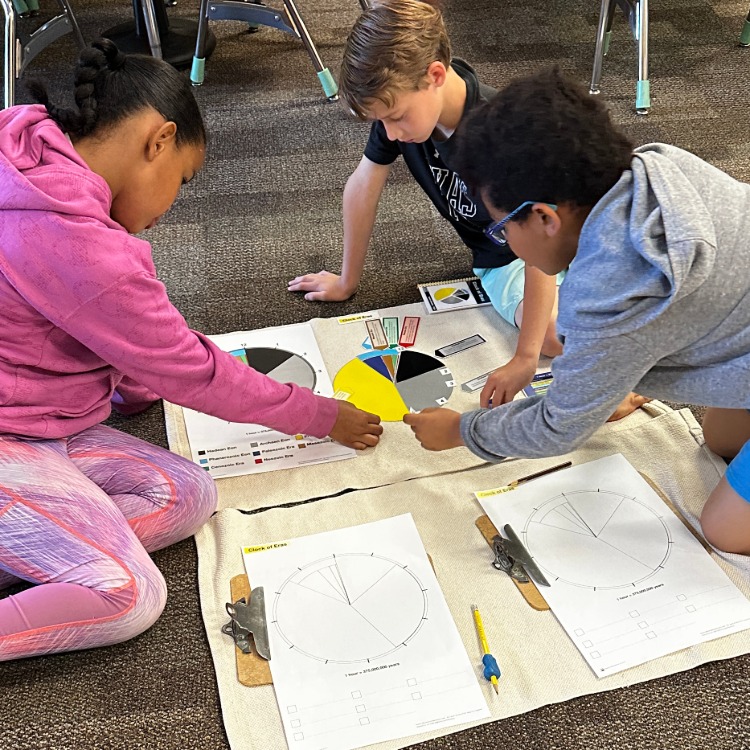
Mixed-age classrooms encourage collaboration and mentorship. Research shows that younger children develop stronger vocabulary and social skills while older children improve leadership, empathy, and mastery through teaching peers.
Growing Independence
As confidence builds, students begin managing more of their own time, choosing work that challenges them, and taking on responsibilities within the classroom community—skills strengthened over several years together.
Upper Elementary (Ages 9–12)
Mastery, Independence, and Leadership
Upper Elementary students are capable of abstract thinking, deep research, and complex collaboration. The three-year cycle at this level ensures students have the time to develop these skills in meaningful ways.
Deep, Meaningful Academic Work
Students transition from guided to independent research, engage in sophisticated math and geometry work, and deepen their writing and critical thinking abilities. Studies show Montessori students across elementary levels demonstrate stronger executive function and more positive school experiences.
Meaningful Leadership Roles
Older students naturally assume leadership—mentoring younger classmates, leading group projects, and managing responsibilities. These opportunities are only possible in a stable, multi-year community.
A Confident Transition to Middle School
By completing the full 9–12 cycle, students emerge academically capable, emotionally grounded, and socially confident—ready for the next stage of learning.
Why We Prioritize Enrollment for Families Committed to the Full Three-Year Cycle
The three-year cycle isn’t just a classroom structure—it’s the foundation of Montessori education. For this reason, we prioritize enrollment for families who plan to complete the full cycle at each level.
Academic Integrity
The curriculum is designed to unfold over three years. Early withdrawal interrupts this progression and prevents children from reaching the mastery that the final year brings.
Balanced Classroom Communities
Mixed-age classrooms depend on having a healthy balance of youngest, middle, and oldest children. This balance allows leadership, mentorship, and peer learning to flourish.
Strong Social and Emotional Growth
Long-term relationships reduce anxiety, build deep trust, and foster collaboration and empathy—benefits repeatedly supported by research.
Alignment with Child Development
Montessori’s three-year cycles reflect the natural developmental stages of childhood. Learning is most effective when it follows these scientifically grounded patterns.
The Takeaway
Whether in Early Childhood, Lower Elementary, or Upper Elementary, the three-year cycle is essential to the Montessori experience. Children who complete the full cycle:
- Build deep academic mastery
- Develop independence and leadership
- Experience strong social-emotional growth
- Become confident, capable members of their community
This is why our admissions process prioritizes enrollment for families seeking a long-term Montessori journey—one that allows children to reap the full benefits of each three-year cycle.

