Montessori at Home:
A Simple Folding Activity with Big Benefits
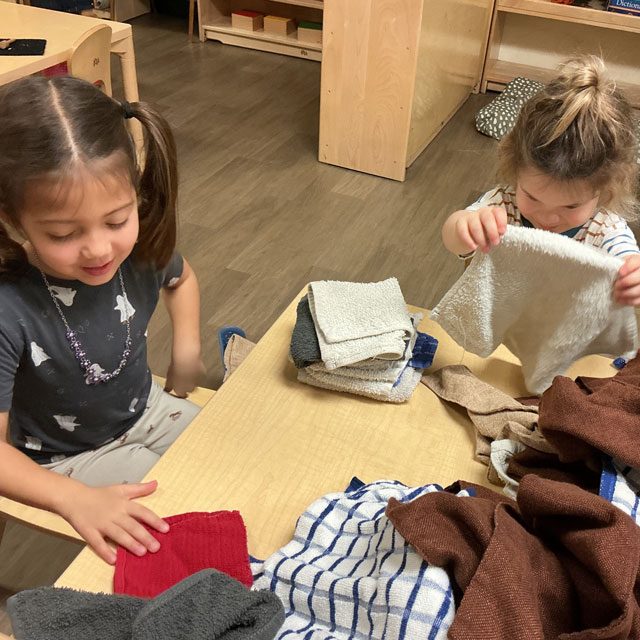


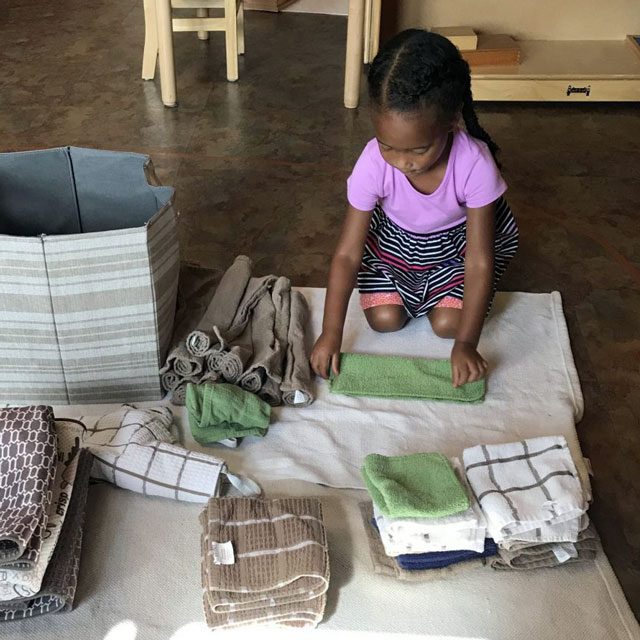
One of the goals of Montessori education is to help children become capable, confident, and active participants in their daily lives. In the Practical Life area of the classroom, children engage in meaningful activities that develop independence while refining important physical and cognitive skills. Folding is one of these foundational activities.
While folding a cloth or napkin may appear simple, it offers children an opportunity to practice concentration, coordination, precision, and care for both themselves and their environment. Through repeated experiences, children gain confidence in their ability to complete a task successfully and contribute to their community.
More Than a Simple Task
When a child folds a cloth, they are doing much more than creating neat corners and straight lines. Like many Montessori practical life activities, folding helps children develop skills that support both their learning and their growing independence.
Through folding, children develop:
- Fine motor skills by grasping, pinching, smoothing, and aligning edges, strengthening the muscles needed for writing, drawing, buttoning clothing, and other everyday tasks.
- Hand-eye coordination as they visually assess their work and make adjustments to create neat folds and straight edges.
- Concentration by focusing on a sequence of movements and working carefully to complete a task from beginning to end.
- Problem-solving skills as they discover what happens when folds do not align and learn to recognize and correct mistakes independently.
- A sense of order through organizing materials and returning them neatly to their place, an important part of the Montessori prepared environment.
- Independence and confidence as they master a practical skill that allows them to care for themselves and contribute to their classroom community.
Folding also supports two key Montessori principles:
- Care of the environment, as children learn to maintain and respect the spaces they share with others. By caring for classroom materials and helping keep the environment orderly, children begin to understand that their actions have an impact on the community around them.
- Care of self, as children learn to manage their own belongings and meet their personal needs with increasing independence. Folding clothing, organizing personal items, and putting things away helps children develop responsibility and confidence in their abilities.
Care of the Environment
In the classroom, folding activities are carefully introduced and practiced. Children may begin by folding simple cloths and gradually progress to more complex folds as their skills develop.
As they gain mastery, folding becomes part of caring for the classroom environment. Children may:
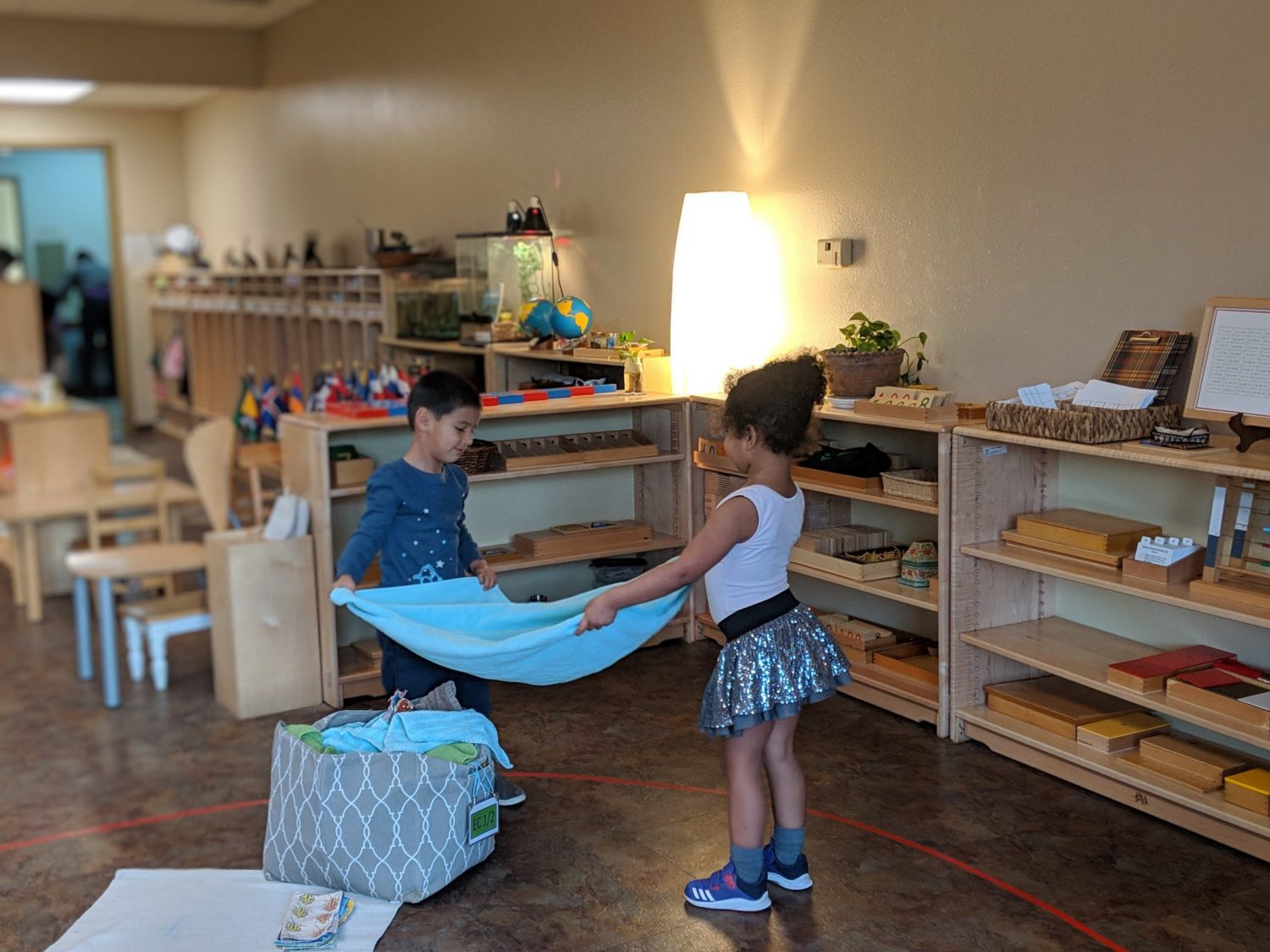
- Fold table-washing cloths after cleaning.
- Prepare napkins or linens for daily use.
- Organize materials on classroom shelves.
- Care for items used by the classroom community.
Because the work has a real purpose, children are often highly motivated to practice it. Each successful effort reinforces the belief that they can care for themselves, their environment, and their community.


Bringing Folding into the Home
One of the wonderful aspects of Montessori practical life activities is that they can easily become part of a family's daily routine. Folding does not require special materials or lessons. Instead, it can be incorporated naturally into everyday household tasks, making Montessori at home both simple and meaningful.
Children can help:
- Fold washcloths and hand towels after laundry is finished, giving them a manageable task with a clear purpose.
- Put away pajamas and simple clothing items, helping them develop independence and ownership of their personal belongings.
- Organize bathroom linens or small blankets, contributing to the order and care of the home environment.
- Prepare napkins for family meals, allowing them to participate in family routines and serve others.
- Fold and store reusable shopping bags, practicing responsibility while helping maintain an organized household.
When folding becomes part of a home routine, children learn to:
- Take responsibility for their belongings through everyday acts of care and organization.
- Contribute to the household and recognize that their efforts have value.
- Strengthen their independence by completing tasks without constant adult assistance.
- Develop a sense of belonging as they participate in caring for their family and home.
Parents often worry about whether the results will be perfect. In Montessori education, however, the goal is not perfection but participation. A slightly crooked towel folded independently often provides more growth and satisfaction than a perfectly folded towel completed by an adult.
Working alongside a parent also creates opportunities for connection, conversation, and shared accomplishment while reinforcing skills learned at school.
Building Independence Through Everyday Work
What may appear to be a simple household task is actually a powerful opportunity for growth. Through folding, children strengthen coordination, concentration, order, independence, and self-confidence while experiencing the satisfaction of contributing to their community.
Whether folding a classroom cloth after table washing or helping put away laundry at home, children are developing skills that extend far beyond the activity itself. Through these simple moments of care of self and care of the environment, children build the competence, responsibility, and confidence that support them throughout life.
Schedule a tour today!


3428 W. Arkansas Lane
Arlington, TX 76016
