Toddler & Early Childhood Montessori at Home: Dry and Wet Pouring

The Montessori Academy of Arlington | Private School in Arlington, TX

One of the most beloved activities in the Montessori Practical Life area is pouring. Simple in appearance yet rich in purpose, dry and wet pouring activities help children refine coordination, concentration, and independence—skills they will use throughout their lives. Best of all, these activities are easily adaptable to the home environment, making them a wonderful way for families to support Montessori principles beyond the classroom.

Why Pouring Matters in Montessori

Pouring work may look like a child simply moving material from one container to another, but a great deal of development is taking place. These activities strengthen:

  • Fine motor control and hand strength
  • Hand–eye coordination
  • Concentration and focus
  • Order and sequence
  • Confidence and independence

Everyday tasks—pouring cereal into a bowl, transferring baking ingredients, watering plants, or filling a cup at the sink—require precision and control. Pouring activities allow children to practice these skills in a purposeful, developmentally appropriate way.

Toddler Dry Pouring

Dry Pouring: Building Precision and Control

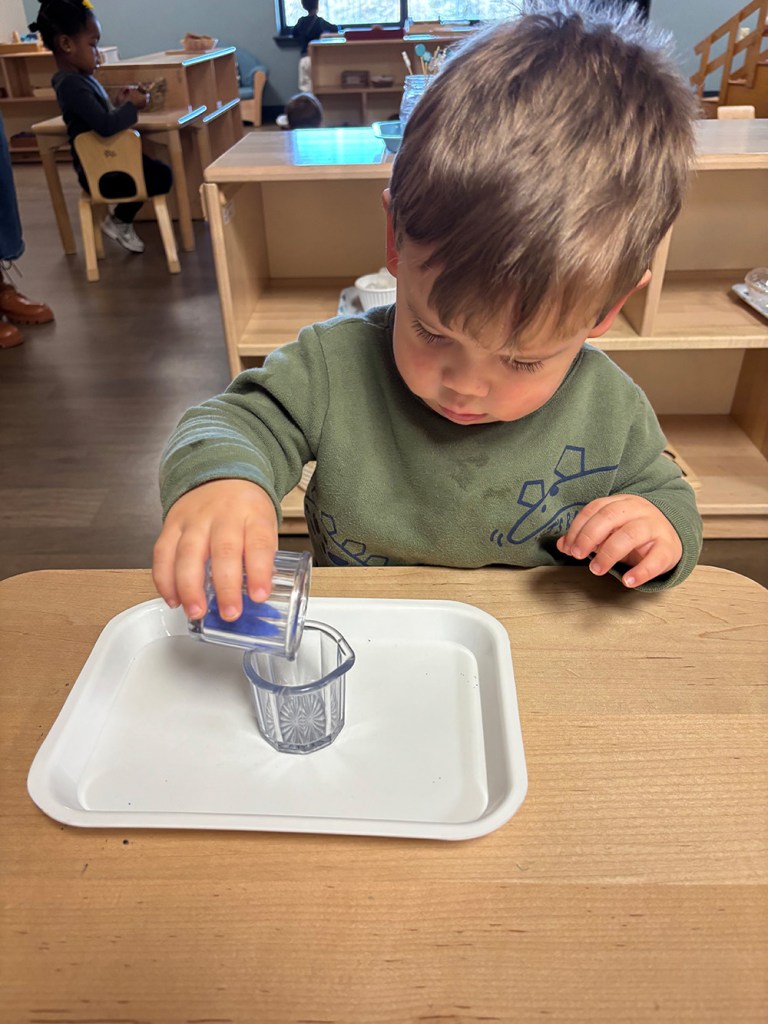
Dry pouring is often one of the first pouring works introduced to toddlers and young children. It typically involves materials such as rice, beans, lentils, beads, or sand being poured from a larger vessel into one or more smaller containers.

Children are naturally drawn to materials with tiny components, and dry pouring satisfies this interest beautifully. As they carefully tip the pitcher or cup, they learn to regulate their movements. It’s powerful to observe how intentional a child becomes—when even a single grain of rice spills, they often pause, retrieve it, and return it to its proper place.

This careful attention builds:

  • Control of movement
  • Awareness of mistakes without adult correction
  • A sense of responsibility for the environment 
Early Childhood Wet Pouring

Wet Pouring: Taking Skills to the Next Level

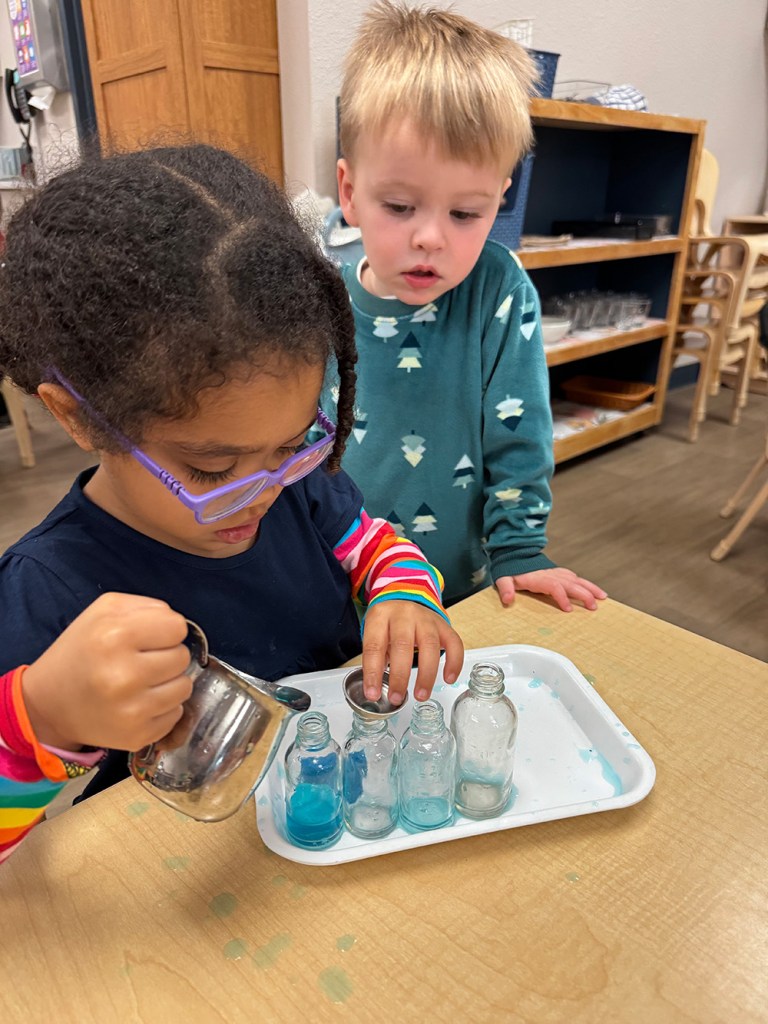
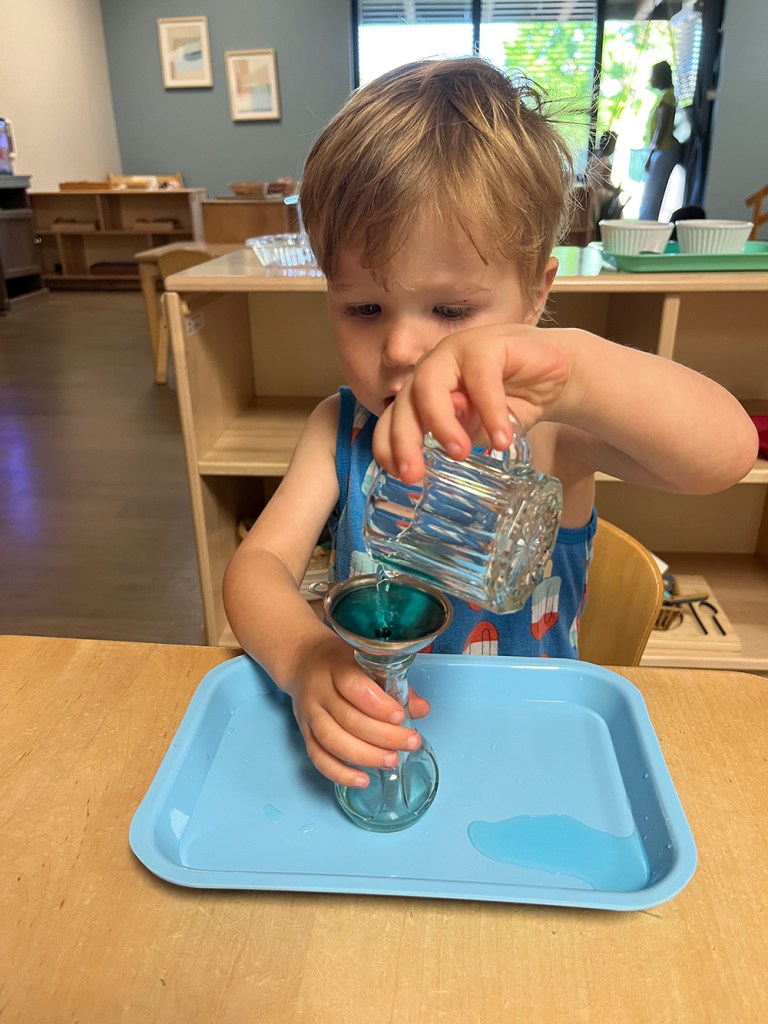
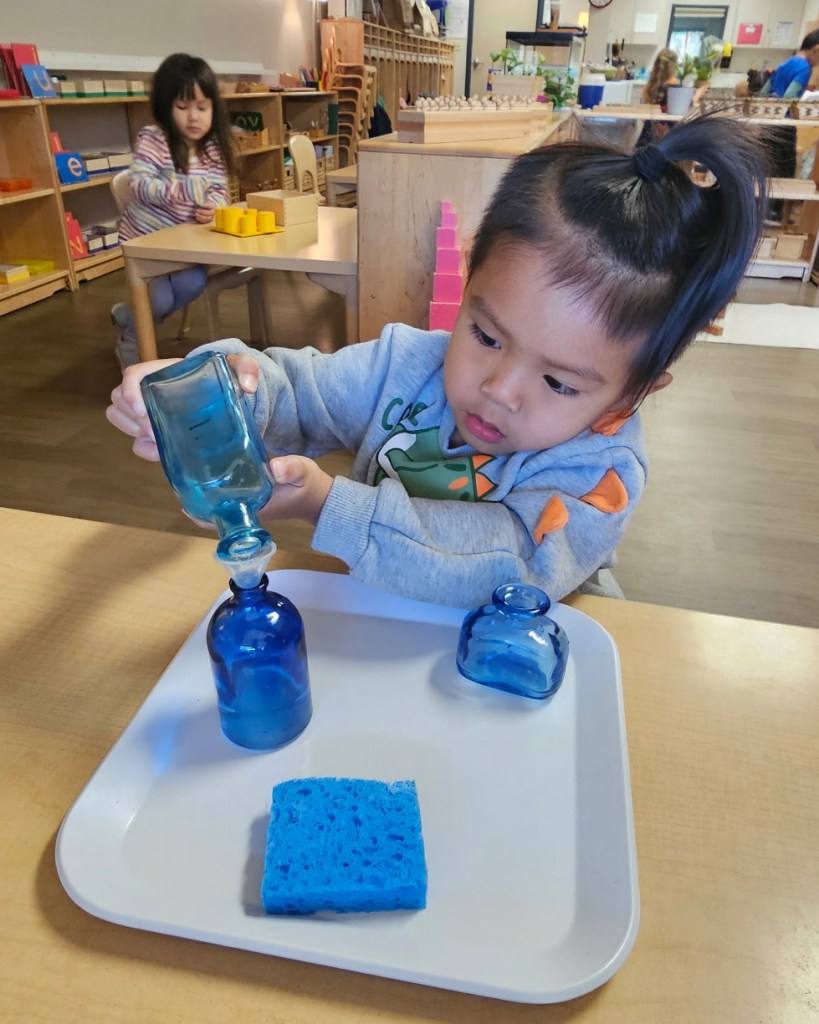
Once a child has developed confidence with dry materials, wet pouring is introduced. Water adds a new level of challenge: it flows faster, splashes easily, and requires even greater precision.

Wet pouring typically involves pouring water from one pitcher to another, sometimes using a funnel or gradually smaller containers as the child’s skill increases. This work strengthens the same foundational skills as dry pouring, while also preparing the child for real-life tasks such as:

  • Washing dishes
  • Filling watering cans
  • Cleaning tables or floors
  • Pouring drinks independently

Mastery of wet pouring is essential for many Practical Life activities. For example, washing dishes or floors requires pouring larger amounts of water into buckets, then carefully transferring that water to a sink or wastewater area. A child who has practiced pouring from an early age approaches these tasks with confidence and success. 

How Pouring Supports the Whole Child

Pouring work supports far more than motor development. It also nurtures:

  • Independence: “I can do it myself.”
  • Problem-solving: Adjusting the angle or speed when something spills.
  • Self-regulation: Slowing down and focusing on the task at hand.
  • Pride in work: Completing a real, meaningful activity.

These experiences help children feel capable and trusted, reinforcing their role as active participants in their own daily care.

Bringing Dry and Wet Pouring into Your Home

One of the greatest strengths of Montessori Practical Life work is its simplicity. You don’t need special materials—most items can be found right in your kitchen.

For Dry Pouring at Home:

  • Use small pitchers, cups, or measuring containers
  • Choose materials like rice, beans, oats, or pasta
  • Set up the activity on a tray or placemat to define the workspace
  • Keep a small brush or spoon nearby for cleanup

For Wet Pouring at Home:

  • Start with a small amount of water
  • Use child-sized pitchers or sturdy cups
  • Practice over a tray, shallow bin, or at the sink
  • Model slow, intentional movements

Always demonstrate the activity first, then allow your child to try independently. The goal is not perfection, but practice.

A Foundation for Life Skills

Dry and wet pouring may seem simple, but they form a critical foundation for more complex Practical Life work and everyday independence. Through repetition, children develop confidence in their abilities and trust in their hands—skills that extend far beyond the classroom.

By offering these activities at home, families create meaningful opportunities for children to participate in daily life, fostering independence, concentration, and a genuine love of purposeful work.

Toddler Wet Pouring
Early Childhood Wet Pouring