Bubble Whisking in Montessori: A Practical Life Activity for Toddlers and Early Childhood

The Montessori Academy of Arlington | Private School in Arlington, TX

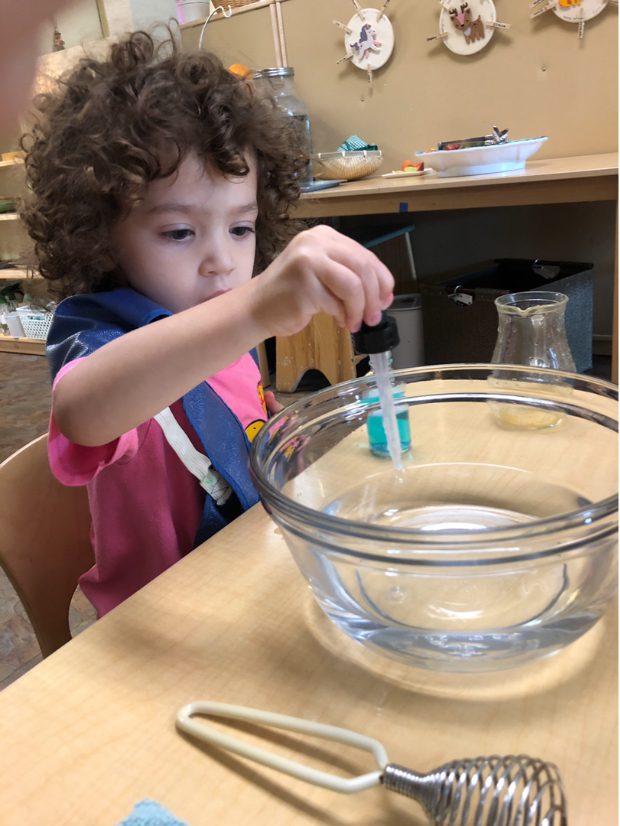
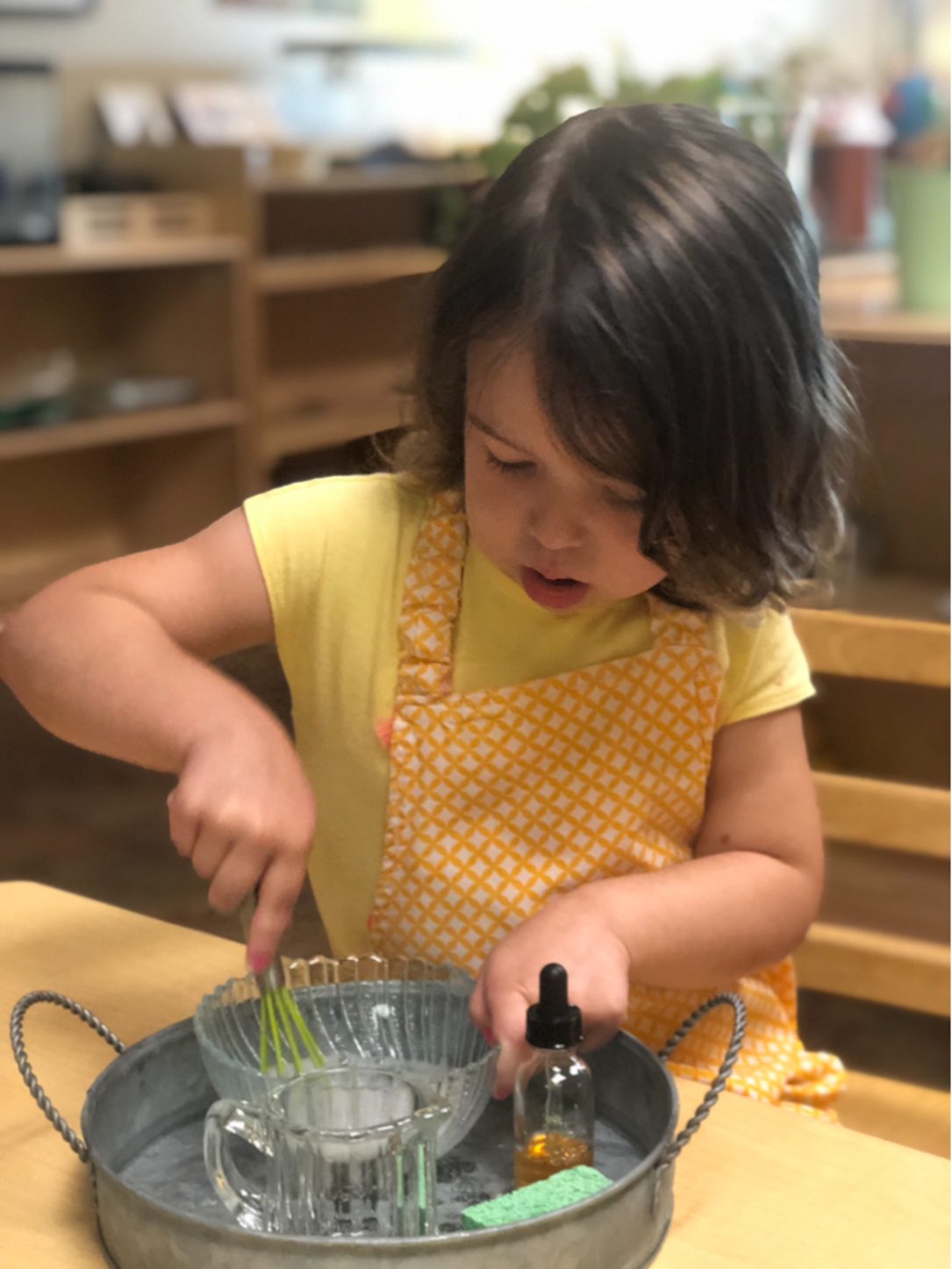
Clink, clink, clink. The gentle sound of a whisk tapping against a glass bowl carries across the Montessori classroom. At the table, a child focuses intently on whisking soap and water into a lively swirl of bubbles. With steady movements, the child works until the bubbles reach just the right consistency.

Next, the child carefully carries the bowl to a nearby bucket, pours the water slowly and deliberately, then returns to the table. Finally, the child dries the bowl and tray with a towel, returns the materials to the shelf, and confidently chooses the next activity.

This experience—known as Bubble Whisking—is a classic Montessori Practical Life activity. While it may appear simple, it plays a powerful role in supporting the development of Toddlers and Early Childhood children.

What Is Bubble Whisking in Montessori?

Bubble Whisking invites children to mix water and soap using a whisk to create bubbles. More importantly, the activity follows a clear, purposeful sequence. Children gather materials, complete the work, clean up, and restore the environment independently.

Because the activity reflects real-life experiences—mixing ingredients, cleaning tools, and caring for shared spaces—children immediately understand its purpose. As a result, they engage deeply and take pride in their work.

Early Childhood Bubble Whisking, The Montessori Academy of Arlington, Private School Arlington TX

 Why Practical Life Activities Matter

At first glance, visitors unfamiliar with Montessori education often ask, “Shouldn’t children be working on reading or writing instead of making bubbles?”

However, Montessori education approaches learning differently. Practical Life activities prepare the child for academic work by developing essential foundational skills first.

Before children succeed with reading, writing, and math, they must develop:

  • Concentration
  • Coordination
  • Order
  • Independence

Bubble Whisking supports each of these areas in a meaningful, hands-on way.

Strengthening Sequencing and Executive Function

To complete Bubble Whisking successfully, a child must remember and carry out a series of steps in order. For example, the child prepares materials, controls the whisking motion, transports water safely, disposes of it properly, and cleans the workspace.

Because of this structure, children strengthen their sequencing and executive function skills. These same skills later support academic tasks such as solving math problems, sounding out words, and following multi-step instructions.


Early Childhood Bubble Whisking, The Montessori Academy of Arlington, Private School Arlington TX

Preparing the Hand for Writing

In addition, Bubble Whisking directly supports fine motor development. Whisking requires controlled wrist movement, bilateral coordination, and hand strength.

Even more importantly, the smooth, circular motion used to whisk closely resembles early letter formation movements. Long before a child picks up a pencil, their hand develops the coordination and control needed for writing through purposeful Practical Life work.

Developing Concentration and Focus

Bubble Whisking naturally encourages sustained attention. Children often repeat the activity multiple times, adjusting their movements to improve control or create more bubbles.

As a result, children strengthen their ability to focus on one task for an extended period. This skill later supports success in academic work, where concentration becomes essential.

In Montessori classrooms, adults do not force focus. Instead, meaningful activities like Bubble Whisking allow concentration to develop organically

.Independence and Respect for the Environment

Beyond physical and cognitive skills, Bubble Whisking also nurtures important social and emotional growth.

Through this work, children:

  • Complete a task independently from start to finish
  • Take responsibility for cleaning materials
  • Show respect for the shared environment

Over time, these experiences build confidence, self-discipline, and a strong sense of responsibility.

Bubble Whisking for Toddlers and Early Childhood

Although the core activity remains the same, Montessori teachers thoughtfully adapt Bubble Whisking for each developmental stage.

For Toddlers, the work often includes:

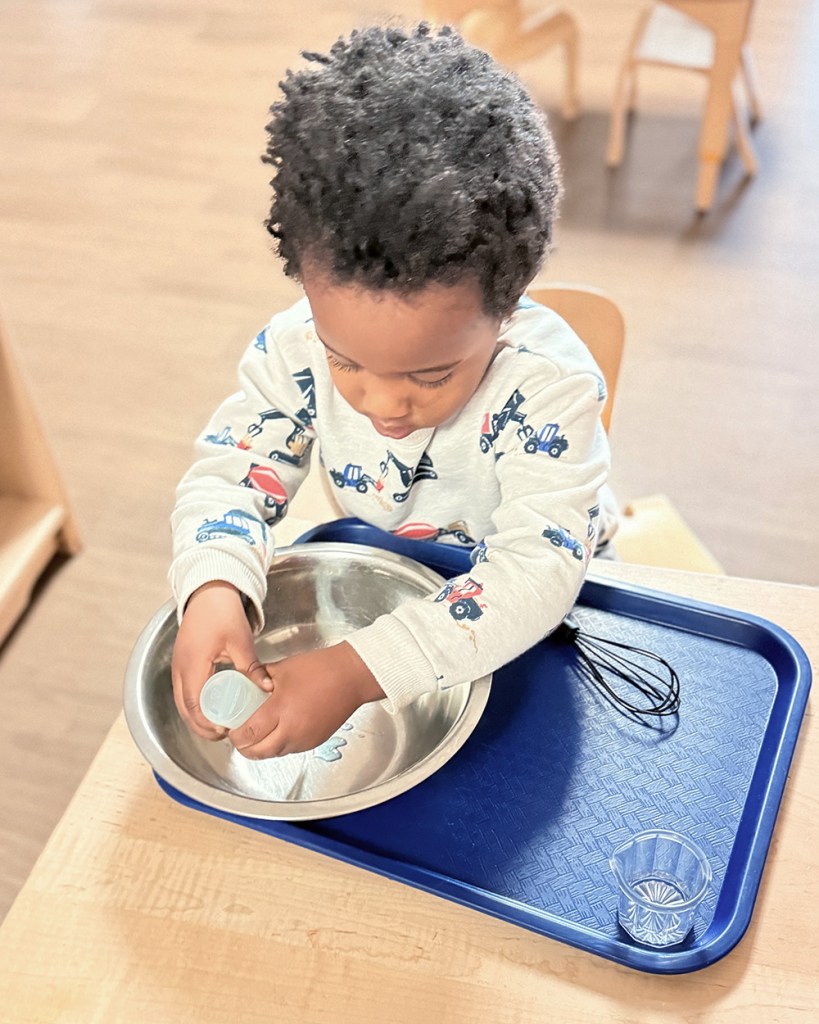
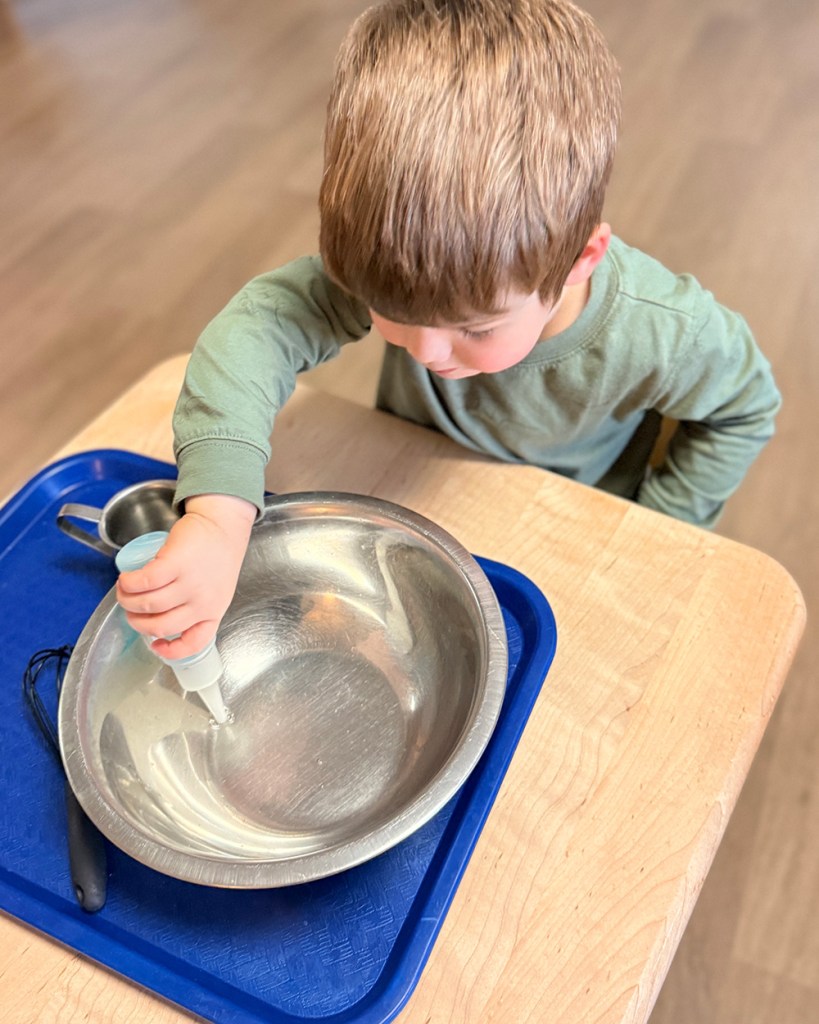
  • Larger bowls and whisks
  • Smaller amounts of water
  • A focus on movement, repetition, and coordination

For Early Childhood children, the activity typically involves:

  • Smaller, more precise tools
  • Longer work cycles
  • Increased attention to order, sequencing, and refinement

In both stages, the activity meets the child exactly where they are.

How to Try Bubble Whisking at Home

Fortunately, Bubble Whisking is easy to recreate at home using everyday materials.

To set it up:

  • Choose a small bowl, whisk, mild dish soap, and water
  • Arrange everything neatly on a tray or placemat
  • Include a towel for drying
  • Demonstrate slow, intentional movements
  • Then, allow your child to work independently

Most importantly, focus on the process rather than the outcome.

A Simple Activity with Lasting Benefits

Ultimately, Bubble Whisking shows how even the simplest Montessori Practical Life activities support the whole child. Through this purposeful work, children prepare for writing, strengthen concentration, and develop independence—all while doing something they genuinely enjoy.

Indeed, something as simple as whisking bubbles can prepare a child for a lifetime of learning.

Toddler Bubble Whisking